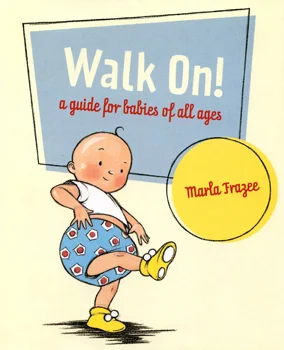
Cover of Walk On!
Walk On!
📚
Hope Pre-K & Kindergarten
By Marla Frazee

Book Guide

Walk On!

A story that explores hope and opens a conversation with your child.

★★★★★ Loved by families
This book teaches: Hope. believing that things can get better.

Before, During & After Reading

Guiding Questions for Parents.

Definition: To be hopeful means to believe that something good can happen, even when it doesn’t look like it, or when it turns out differently than expected. In short: Believe that something good can happen. Summary: Before reading this story, teachers will need to tell students to imagine what it is like for a baby learning to walk. Explain that most people can’t remember what it was like when they went from crawling to walking. Additionally, explain that  babies don’t really think about it - they just do it. But this author is telling a story as if a baby could think about what they are doing and understand the advice on these pages - which it can’t, of course! Children will find this book funny, especially if they are around a younger sibling who’s learning to walk. Babies have confidence, will power, and hope - because they believe they can walk, they work at it until they do.  Lesson Objectives: 
  1. Students demonstrate understanding about what it means to have hope and how it helps us to do difficult things when we’re babies and as we grow older. 
Guiding Questions: 
  1. Do you remember when you learned to walk? Probably not, so ask your parents to tell you about it : how old were you, did you fall down a lot, did learning to walk make you happy? 
  2. What does a baby have to watch out for when learning to walk?
  3. How do you think a baby knows when it is time to try to walk? 
  4. Share about a time you watched a baby learning to walk. If you don’t have a memory of this, see if you can find a baby who’s trying to walk when you’re out and about. 
  5.  What are some of the words you can use to encourage someone who’s trying to learn something new? 
  6. This story is not just for babies who’re learning to walk. The author wants you to use this advice when you’re trying to learn anything new. Share about something you’re trying to learn. 
  7.  Hope means to believe that good things can happen, even when it doesn’t seem like it’s possible.  Is there something in your life that doesn’t seem possible? What is it? 
  8. Share about why it’s difficult to do the thing in #7 and where you can get some help to do it. 
  9. Ask a parent to talk about a time when they didn’t think they could do something. Did they do it and what helped them? 
  10. Why do you think it’s important to have hope? Ask the same question to an older person, a parent or grandparent. 
🌿   Virtue Connection: Hope means believing that what comes next can be better.

About the Story.

This guide is part of the Values & Virtues library, a free collection of 400+ book guides and activities organized around 12 core virtues for children from pre-K to 6th grade. Each guide includes Guiding Questions designed to open a real conversation with your child in 10 minutes or less.

Read-aloud video · Best with headphones
Find this book at your library or bookstore →

Explore more guides for Pre-K & Kindergarten.