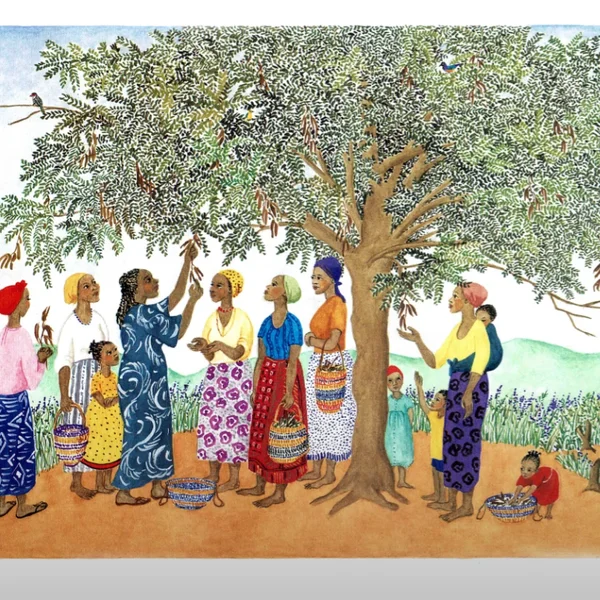
Cover of Planting the Trees of Kenya - The Story of Wangari Maathai
Planting the Trees of Kenya - The Story of Wangari Maathai
📚
Gratitude 3rd & 4th Grade
By Claire A. Nivola

Book Guide

Planting the Trees of Kenya - The Story of Wangari Maathai

A story that explores gratitude and opens a conversation with your child.

★★★★★ Loved by families
This book teaches: Gratitude. noticing and appreciating what is already good.

Before, During & After Reading

Guiding Questions for Parents.

Definition: A grateful person is thankful for people, nature, and things and is able to make the best of what they have, even if it’s not as much as what others have.  Stewardship means showing  thankfulness for what we have by taking good care of what we’ve been given.  In short: Thankful for every blessing, big or small. Summary: This is a true story about a young woman in Kenya who solves an environmental problem in her country and wins the Nobel Peace Prize. Wangari Maathai works hard to restore the land where she lives. Instead of blaming others for the problem, she decides to take action. She teaches other women how to take care of seedlings, acquire water, and plant trees and vegetables. Eventually, she creates a movement, the Greenbelt Movement, and many others join in to restore the land to its original natural state. At the end of the book is a fact-filled author’s note.   Lesson Objectives: 
  1. Students will be inspired to develop a greater “can do” mindset along with an attitude of gratitude.
  2. The teacher guides them to make lists of what they do have and what’s missing that would make life better. Students brainstorm about what they could do to improve their circumstances.  
  Guiding Questions: 
  1. What happened to the plentiful trees and birds in the story and how did that affect the people who lived in Wangari’s village? 
  2. Instead of complaining about the problem, what did Wangari do? 
  3. “When we see part of the problem we can become part of the solution?” This is what Wangari tells her people. What does it mean? 
  4. Why do you think the women of the village didn’t know how to read or write? 
  5. Can you explain why it was so hard for them to collect water for the seedlings? 
  6. Even though it was difficult work to take care of and plant the seedlings, Wangari and her team didn’t give up. What made them so determined to succeed? 
  7. Wangari told her team that everytime a tree was cut, they needed to …? (fill in the blank)
  8. Do you think plants and trees can respond to human emotions? Why or why not? Can they feel loved or hated? 
  9.  Why are trees so important to people and animals? Share about your favorite kind of tree and why you like it. 
  10.  Have you ever planted a tree or created a garden? If so, what did you grow and what was it like for you? If you haven’t, share about what you’d like to plant/ 
 
🌿   Virtue Connection: Gratitude means noticing and appreciating what is already good.

About the Story.

This guide is part of the Values & Virtues library, a free collection of 400+ book guides and activities organized around 12 core virtues for children from pre-K to 6th grade. Each guide includes Guiding Questions designed to open a real conversation with your child in 10 minutes or less.

Read-aloud video · Best with headphones
Find this book at your library or bookstore →

Explore more guides for 3rd & 4th Grade.