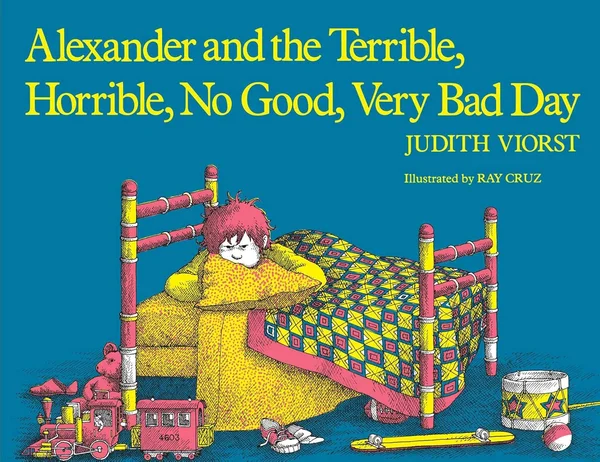
Cover of Alexander and the Terrible, Horrible, No Good, Very Bad Day
Alexander and the Terrible, Horrible, No Good, Very Bad Day
📚
Patience 1st & 2nd Grade

Book Guide

Alexander and the Terrible, Horrible, No Good, Very Bad Day

A story that explores patience and opens a conversation with your child.

★★★★★ Loved by families
This book teaches: Patience. staying calm while something unfolds.

Before, During & After Reading

Guiding Questions for Parents.

Definition: Patience means having self-control, waiting and enduring when one would rather not. In short: Stay calm while you wait. Summary: Alexander’s day begins badly. He predicts that the rest of the day will be terrible, and it is. Some days are just like that. At least that’s what his mom says. But is it a self-fulfilling prophecy?    Lesson Objectives: 
  1. Students will be guided to discuss Alexander’s bad day - did it have to be that bad? Is there something he could have done differently? They will gain skills to help them deal with adverse circumstances, some over which they have no control, and some that they can do something about. They will be empowered by the fact that the one thing we can all control is our attitude and when we do, things might turn out better. 
  Guiding Questions: 
  1. Describe how Alexander’s day began. 
  2. Why does he keep saying, “I think I’ll move to Australia?” What is he really saying? 
  3. How old do you think Alexander is? Do some of the things that happen to him happen to you? Which ones? 
  4. Do you think Alexander’s day would have been better if he decided in the morning that he would try to do things that would make his day turn out better? What advice would you give him? 
  5. What mistakes did Alexander make at his Dad’s office? 
  6. Do you agree that some days are like that? Have you had a day like that? 
  7. What do you think the author of this book wants you to learn from reading it? 
  8. What’s one thing you could do to make things better if your day starts out badly? 
  9. Some difficult experiences we cannot control, like when it rains and we can’t play sports. When we can’t control a situation, we can always control ___________. (how we react and think about it)
  10. How’s your day going today? If it’s not going the way you want it to, what can you do to make things better? 
🌿   Virtue Connection: Patience means waiting without losing yourself.

About the Story.

This guide is part of the Values & Virtues library, a free collection of 400+ book guides and activities organized around 12 core virtues for children from pre-K to 6th grade. Each guide includes Guiding Questions designed to open a real conversation with your child in 10 minutes or less.

Read-aloud video · Best with headphones
Find this book at your library or bookstore →

Explore more guides for 1st & 2nd Grade.